
Reviewed · HISTORICAL TOURS
Full Day-Port-Louis Cultural Tour
Port Louis rewards curious visitors. This private cultural tour gives you a useful first look at Mauritius, linking Hindu, Chinese, Catholic, colonial, postal, and Indian indenture stories in one day. I like the air-conditioned private vehicle and hotel pickup, which matter when you are starting from Trou d’Eau Douce and facing several hours on the road. I also like the mix of famous sights and working city places, especially Central Market and the old post office.
The main drawback is that the day can feel rushed, and the quality depends heavily on your driver-guide. Jean Philippe has been praised for explaining the day clearly and keeping the route organized, while Vish was described as friendly and helpful. Still, one serious pickup failure was reported, so confirm your meeting time and contact details before departure.
In This Review
- Key points to know before booking
- What this Port Louis tour is really offering
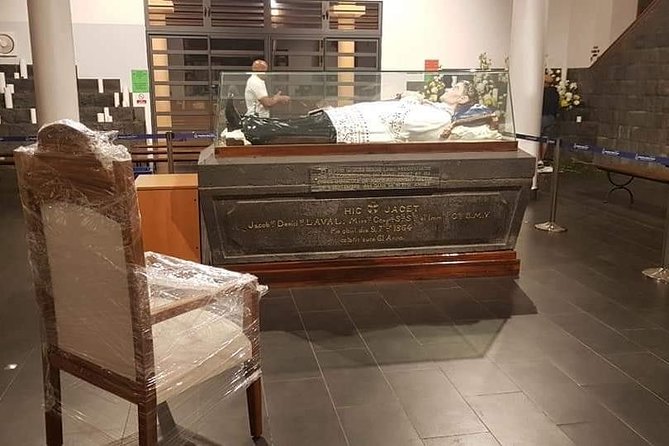
- Starting at Père Laval’s Shrine
- Reading the design of Kaylasson Temple
- Finding calm at Kwan Tee Pagoda
- The old Central Post Office and Mauritius’s postal past
- Taking lunch at Le Caudan Waterfront
- Exploring Central Market in a short visit
- Understanding Mauritius at the Blue Penny Museum
- Aapravasi Ghat and the story of indentured labor
- How the guide and vehicle affect the day
- Flexibility, limits, and value
- Who should book this Port Louis experience?
- Should you book it?
- FAQ
- Where does the tour begin?
- How long does the Port Louis tour last?
- Is this a private tour?
- How many people can join?
- Is lunch included?
- Is Blue Penny Museum admission included?
- What languages may the guide speak?
- Is walking required?
Key points to know before booking
- A private vehicle keeps the day flexible: Only your group takes part, and the driver can sometimes adjust the order or swap a stop.
- The tour covers several sides of Mauritius: You see religious sites, colonial buildings, museums, the market, and Aapravasi Ghat.
- Lunch is at your own expense: The planned break is at Le Caudan Waterfront, with a view over Port Louis Bay.
- Museum entry costs extra: The Blue Penny Museum is included in the route, but not in the tour price.
- The guide can make or break the experience: Jean Philippe and Vish received especially warm praise for being organized, friendly, and helpful.
- Check the booking limits carefully: The information gives a price for up to three people but also lists a maximum of two people per booking.
What this Port Louis tour is really offering
Port Louis is not a city you understand from a quick drive past its waterfront. Its character comes from the way different communities shaped the capital: Indian religious traditions, Chinese-Mauritian culture, French and British colonial administration, Catholic pilgrimage, and the movement of indentured workers after slavery ended.
This tour gives you a broad introduction in six to seven hours. You are not spending half a day inside one museum or taking a slow architectural walk. Instead, you move between important places, usually spending about 20 to 30 minutes at smaller stops and longer at the waterfront and Blue Penny Museum.
That format suits you if this is your first visit and you want to get your bearings quickly. It is less suitable if you prefer long visits, quiet photography, or detailed museum study. You will see many subjects, but some stops are short.
The cost is $111.58 per group, not per person, which can be good value for a private tour if two people share it. The price includes the driver-guide, hotel pickup and return, and private air-conditioned transport. You still pay for lunch, drinks, gratuities, and Blue Penny Museum admission. Optional souvenir photos or DVDs may also cost extra.
More Historical Tours in Trou d'Eau Douce:
- Dodo’s Trail: Discover Mauritius’ Heritage & Creole Lunch
★ 4.5 · 105 reviews - Mauritius: Le Morne Brabant Hike with Historical Immersion
★ 4.8 · 27 reviews - Historical Guided Day Tour : City – Sugar World – Botanical Garden
★ 4.5 · 20 reviews
Starting at Père Laval’s Shrine
The first stop is Père Laval’s Shrine, an important place of prayer for people from different religious backgrounds. Its appeal is not only architectural. The shrine reflects the way faith operates in Mauritius, where a Catholic site can draw people from across the island’s religious communities.
You have about 20 minutes here, so expect a short visit rather than a long guided study. That is enough to see the setting and understand why the shrine matters, but you may want to ask your guide for the local story behind Père Laval if religious history interests you.
This is a good early stop because it introduces one of the tour’s central themes: Mauritius is not defined by one tradition. The day keeps returning to that idea in different forms.
Reading the design of Kaylasson Temple
Kaylasson Temple is one of the more visually distinctive stops. Its traditional design includes six stations that symbolize the organs of the human body. The idea is that a worshipper entering these spaces should treat the temple with the same respect as the human body.
You get around 20 minutes here. That does not leave much time for a slow look at the details, so listen closely to the guide’s explanation and dress respectfully. The stated dress code for the tour is relaxed, but religious sites still call for sensible clothing and considerate behavior.
I like this stop because it offers more than a quick photo. The temple’s layout carries a meaning that is easy to miss if you only look at the colors and decoration. Your guide may also help explain how the site fits into the Hindu culture of Mauritius.
Finding calm at Kwan Tee Pagoda
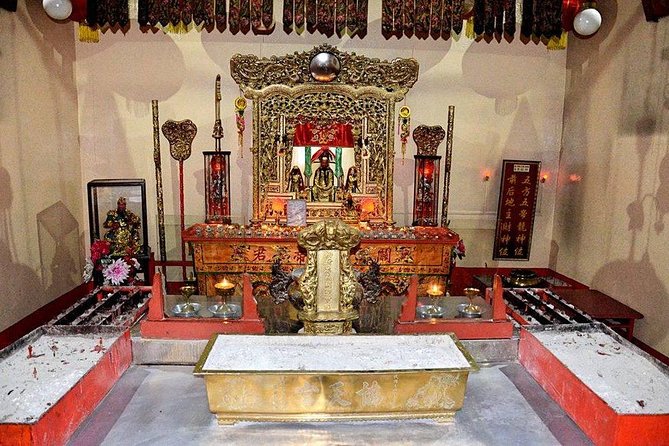
Kwan Tee Pagoda is described as the oldest pagoda in Mauritius and the oldest in the Southern Hemisphere. Located at Les Salines, it faces the sea and the mountains, with gardens and coconut trees around the grounds.
The supplied timing gives this stop as 20 hours, which cannot fit within a six to seven hour tour. Treat that figure as an obvious timing error and confirm the actual visit length before you go. The rest of the schedule suggests this is intended to be a short stop.
The pagoda’s setting is one of the day’s quieter contrasts. Port Louis can feel busy and compressed, yet this site is presented as a place for peace and meditation. You do not need a long visit to appreciate that change of mood.
Look for the way the location relates to the sea and mountains. The position is not described as random. Its placement follows spiritual principles, adding another layer to what might otherwise be a brief sightseeing stop.
A few more trips in Trou d'Eau Douce worth putting side by side
- South-West of Mauritius Private Full-Day Scenic Tour
★ 4.5 · 421 reviews - Tropical South West of Mauritius: Full-day All Inclusive tour (Visit to 3 parks)
★ 4.5 · 279 reviews - Mauritius full day : Private north tour
★ 4.5 · 193 reviews - Full Day Tour 5 Island to Ile Aux Cerfs Incl. Lunch and Transfer
★ 4.0 · 155 reviews
The old Central Post Office and Mauritius’s postal past
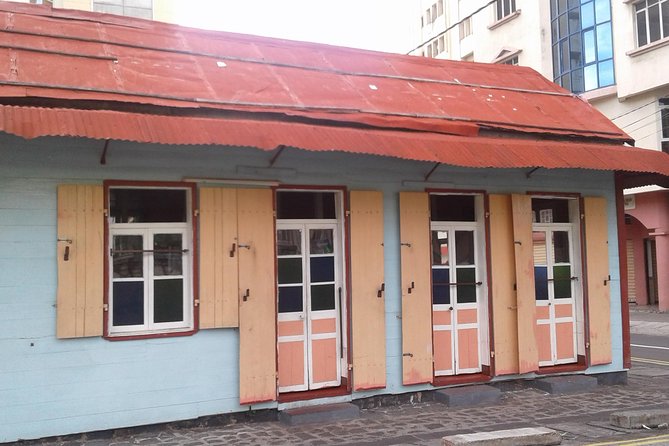
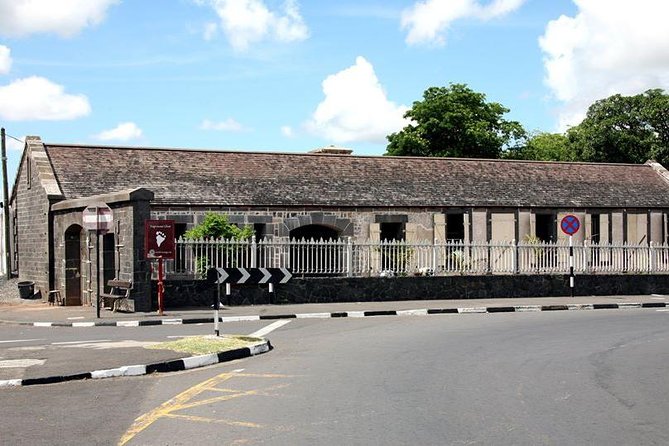
The Port Louis Central Post Office dates from the early colonial period. The building was erected in 1868 and inaugurated in December 1870 by Governor Gordon. Today, it also functions as a postal museum, with displays about stamps and the development of postal services.
This stop lasts about 30 minutes and is a useful bridge between architecture and everyday history. Postal services in Mauritius were once connected with railway stations, which also served as post offices in some places. The setting has changed too. The open space in front of the colonial building was later replaced by the motorway.
I appreciate this kind of stop because it shows history through ordinary systems rather than only grand monuments. Stamps, mail routes, railway links, and government buildings tell you how the island was administered and connected.
Admission is listed as free. If you like old public buildings, transport history, or stamp collecting, use your short visit well and ask your guide what parts of the postal collection deserve attention.
Taking lunch at Le Caudan Waterfront
Le Caudan Waterfront is the day’s longest break, with about an hour and a half set aside for lunch and free time. You choose and pay for your own meal, with the suggested setting being the Deck at the waterfront and its view over Port Louis Bay.
This stop gives you a needed pause after the temples and city sights. It also lets you decide how quickly you want to eat. If you have dietary needs, vegetarian food can be requested when booking, and specific dietary requirements should be mentioned in advance.
The waterfront is practical rather than deeply historic, but it gives you space to rest, look over the bay, and walk at your own pace. Since lunch is not included, budget for it separately. The same applies to drinks.
A private tour is useful here because your guide can explain when to meet again, reducing the chance of losing time during the free period. Jean Philippe was praised for setting out the day clearly, and that sort of organization matters most during open breaks.
Exploring Central Market in a short visit
Central Market brings you closer to daily Port Louis life. The market sells fruit, vegetables, souvenirs, Chinese herbal medicines, and aphrodisiacs. You have only about 20 minutes, so this is a quick walk rather than a relaxed shopping session.
I would use the time to look first, then buy only if something catches your eye. Markets can be less comfortable if you are trying to follow a strict schedule, so keep purchases simple and stay aware of the meeting time.
This stop helps balance the formal sites. After shrines, colonial buildings, and museums, you see a place built around trade and routine. It is also one of the better spots for observing the mix of communities that gives Port Louis its character.
If you want a long browse, ask whether the route can allow more time here. The tour is private, and one previous guide allowed changes to the planned route. That flexibility is useful, but it depends on traffic, opening hours, and the guide’s judgment.
Understanding Mauritius at the Blue Penny Museum
The Blue Penny Museum is the main indoor cultural stop and receives about an hour. Admission is not included, so check the current entrance cost before departure and carry that extra budget.
The museum begins with maritime exploration in the Indian Ocean, then moves through the three colonial periods of Mauritius. It continues with the development of Port Louis during the 18th and 19th centuries and the history of postal services.
The best-known material concerns Mauritius’s first postage stamps, including the famous Post Office stamps. The visit ends with the tragic story of Paul and Virginie, a mythical couple closely tied to the island’s cultural memory.
I like the museum’s structure because it gives you a timeline rather than a pile of disconnected objects. It can help make sense of the other stops you have already seen. After visiting the Central Post Office, the postal displays here should have extra meaning.
The tradeoff is time. An hour is enough for an introduction, but not for a slow reading of every display. If museums are your priority, you may find the visit too brief. If you want a clear overview before exploring more of Mauritius on your own, it is a sensible inclusion.
Aapravasi Ghat and the story of indentured labor
Aapravasi Ghat is one of the most important historical places on the route. The site covers 1,640 square meters and marks the beginning of the modern indentured labor diaspora.
In 1834, the British Government selected Mauritius as the first location for its experiment using indentured labor to replace enslaved workers. Between 1834 and 1920, almost half a million indentured laborers arrived from India at Aapravasi Ghat. Some worked on Mauritius’s sugar plantations, while others were sent onward to Réunion, Australia, Africa, or the Caribbean.
You have about 30 minutes here. That is a short time for a subject of such scale, but even a brief visit gives the city’s cultural mix a clearer meaning. The communities you encounter at temples, markets, and religious sites are connected to this larger movement of people.
I would pay attention here even if you have limited interest in historic buildings. Aapravasi Ghat explains a major part of Mauritius’s modern identity and links the island to a much wider global story.
How the guide and vehicle affect the day
The private format is one of the tour’s strongest features. You travel by air-conditioned vehicle, receive hotel pickup and drop-off, and do not share the day with a large group. From Trou d’Eau Douce, that comfort matters because the capital is not right outside your hotel door.
The tour requires some walking, and a moderate level of fitness is recommended. The day combines vehicle transfers with short visits, market walking, museum time, and movement around religious sites. Comfortable shoes are a sensible choice.
Guide quality appears to vary, but the strongest comments are specific. Vish was described as lovely, helpful, and good at giving an overview of the city. Jean Philippe was praised for explaining the day in advance, organizing the route, and handling the visits in a clear way.
There was also a serious complaint about a missed 9:00 a.m. pickup. The guests waited until 9:30 a.m. and had the hotel receptionist call the operator. The response apologized, but the incident shows why you should confirm the pickup time and keep the provider’s contact information available on the morning of the tour.
The tour may be conducted in English or French by a multilingual guide. Children must be accompanied by an adult, and the minimum age is 14.
Flexibility, limits, and value
A private tour gives you more control than a fixed group excursion. One guide allowed a change to the route, including dropping some churches and shrines in favor of the Seven Coloured Earths at Chamarel. That sort of adjustment can help if your interests are clear from the start.
Still, flexibility does not guarantee that every substitute will improve the day. The same change was judged not worth the extra trouble, which is a reminder to discuss alternatives before leaving. Port Louis’s cultural route and Chamarel’s sights are very different experiences.
The advertised price is attractive for two people because it covers the vehicle and guide for the whole group. It becomes less compelling if you are alone, especially after adding museum admission, lunch, drinks, and optional extras. The published details also conflict on group size: the price says up to three people, while the booking conditions state a minimum of two and a maximum of two. Confirm this before paying.
Free cancellation is available up to 24 hours before the start time. Changes or cancellations inside that window are not accepted for a refund.
Who should book this Port Louis experience?
I would choose this tour if you are visiting Mauritius for the first time, want a broad introduction to Port Louis, and prefer a private car over managing several separate taxis or visits. It is especially useful for couples or small groups who value hotel pickup and a guide who can explain the cultural links between the stops.
You should also consider it if you want a day with more substance than a beach transfer. The temples, Central Post Office, Blue Penny Museum, and Aapravasi Ghat cover subjects that a simple waterfront visit will miss.
I would hesitate if you want a slow, specialist tour of one subject. The schedule is full, museum entry costs extra, and some visits are short. I would also confirm the operator’s pickup arrangements because the missed pickup incident is the one issue I would not ignore.
Should you book it?
Book it if you want efficient first-day orientation in Port Louis, private transport, and a guide-led introduction to Mauritius’s many communities. The best parts are the variety, the flexibility of a private vehicle, and the chance to connect religious sites, postal history, the market, and indentured labor in one outing.
Skip it if you already know Port Louis well or would rather spend a full morning at one museum or historic site. Before booking, confirm the group-size rule, museum admission cost, pickup time, and the exact length of the Kwan Tee Pagoda stop. Those checks will make the $111.58 group price easier to judge.
FAQ
Where does the tour begin?
Hotel pickup is offered, and the tour is based in Trou d’Eau Douce, Mauritius. Hotel drop-off is also included.
How long does the Port Louis tour last?
The experience lasts approximately six to seven hours.
Is this a private tour?
Yes. Only your group participates, and transport is provided in a private air-conditioned vehicle.
How many people can join?
The booking information requires at least two people and lists a maximum of two people per booking. It also gives a price for a group of up to three, so you should confirm the permitted group size before booking.
Is lunch included?
No. Lunch and drinks are not included. You have about 90 minutes at Le Caudan Waterfront to eat at your own expense.
Is Blue Penny Museum admission included?
No. Entrance to the Blue Penny Museum is not included in the tour price.
What languages may the guide speak?
The guide may be multilingual and may conduct the tour in English or French.
Is walking required?
Yes. An amount of walking is involved, and a moderate level of physical fitness is recommended. Children must be accompanied by an adult, and the minimum age is 14.
New in Trou d'Eau Douce this month
- The Adventure East of Mauritius: 3-Watersport Activities & Blue-Bay Marine Park★ 4.0 · 3 reviews
- The East Discovery Tour: Bois-Cheri Tea Factory, Blue-Bay Marine Park & Lunch★ 4.0 · 3 reviews
- Mauritius: Ile aux cerfs, waterfalls and bbq Boat Day★ 4.8 · 3 reviews
- Tea and Culture Route★ 4.5 · 3 reviews
- Hiking the Black River Gorges: Full-day with Lunch and Transfer★ 4.5 · 3 reviews
- Eastern Treasures of Mauritius: incl Rhumerie St Aubin & Blue-Bay Marine Park★ 4.5 · 3 reviews
- Private Airport Transfer To Anywhere And Anywhere In Mauritius★ 5.0 · 4 reviews
- Mauritius City Tour, ALL INCLUSIVE Day Trip, Private SUV Car with Guide★ 5.0 · 4 reviews
Historical Tours, compared.
Dodo’s Trail: Discover Mauritius’ Heritage & Creole Lunch
Read our review →
Historical Guided Day Tour : City – Sugar World – Botanical Garden
Read our review →
Historical Private Guided Tour, City-SugarWorld-Botanical Garden – Min.2 persons
Read our review →
Cultural Delights & Heritage Treasures in the City
Read our review →
Le Morne Brabant Hike A Journey Through History
Read our review →Browse the lists this tour appears in